The ZyG Blog
The ZyG Blog
The ZyG Blog

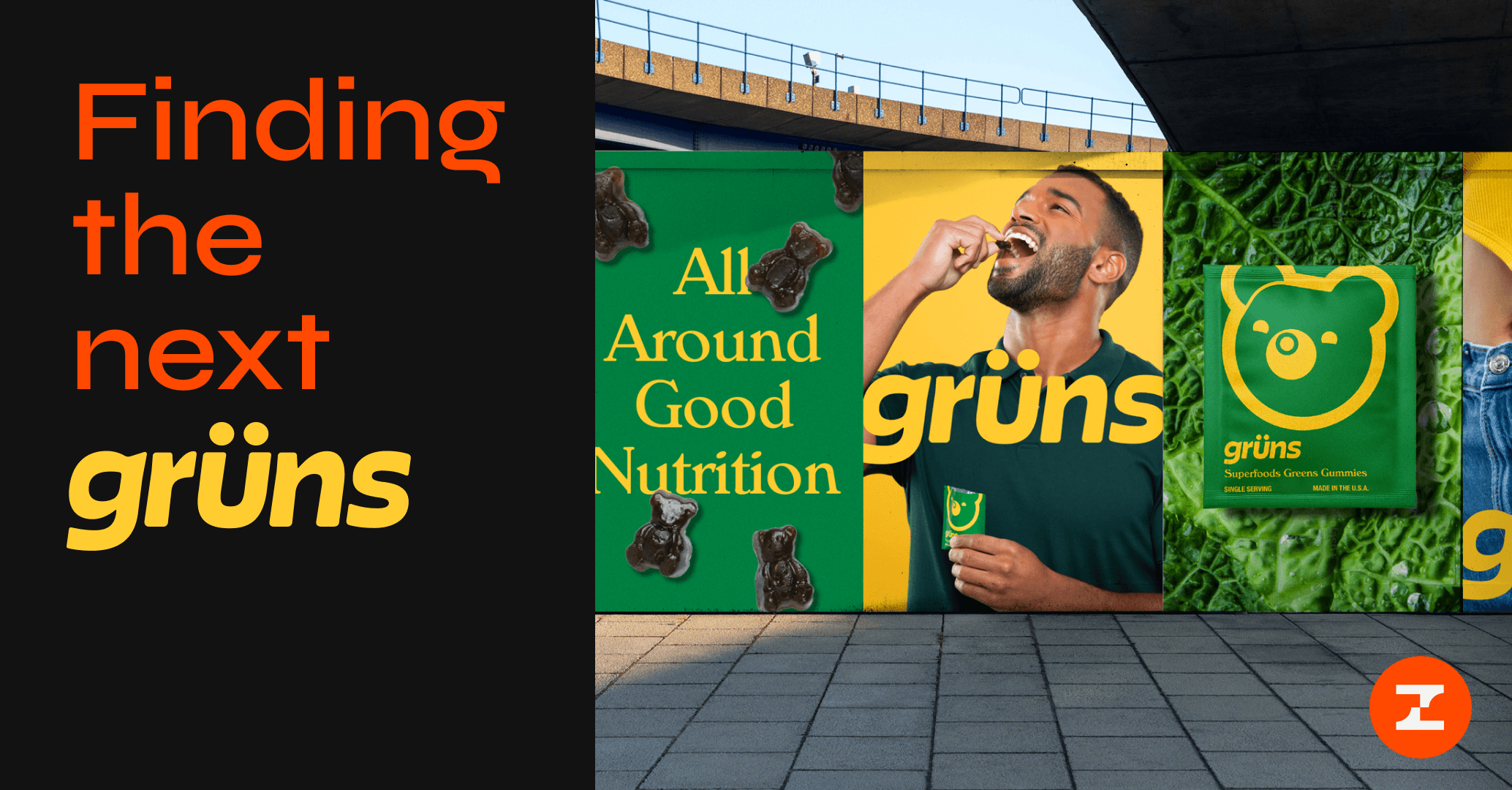
Grüns, the vitamin and supplement company, was recently acquired for an eye-popping $1.2B by Unilever. Grüns is the rare example of a DTC-first brand that built an incredibly-strong brand that stood out in a crowded space, defying the 90% failure rate of DTC brands. While many stars have to align to make a product into a super successful brand, Grüns was able to bring an innovation to market that solved an age old problem: convincing people to
Launched in 2022, founder Chad Janis created a new delivery system to transform taking vitamins and supplements from an unpleasant chore (think powders and pills) to tasty gummies delivered in daily sachets. The company’s online-first strategy created a feedback loop with customers that let Grüns iterate quickly on the product - reportedly making five tweaks to the product in the first year - and prove demand before scaling into an omnichannel strategy. Grüns hit ~$300M+ run rate within ~2 years.
Innovation isn’t enough…
Indeed, many DTC products go to market with an innovation or twist on an existing product - a new delivery mechanism (DSC, Hims), a new format of consumption (Grüns, AG1) or creation of new habits (Quip, Care/of). But innovation isn’t enough. The question is how the market - meaning real life customers - react to your innovation. But with rising customer acquisition costs (CAC) post-iOS 14, most brands don’t have the ability to test their product’s appeal and potential in the real world. The result is many DTC products that have the potential to become great brands but never get the signals they need to move forward. And if they do move forward, they don’t have the massive scope of expertise and financing needed to execute and reach scale.
Finding the next Grüns
But what if there was a way to identify which DTC products have Grüns-level potential and then help them scale? This is exactly the pain the ZyG OS addresses.
First, we are able to test a product’s scale potential in the real world with the ZyG PMF Test. Completely agentic, this test results in a clear go/no go signal on a product’s growth potential. The test includes:
Product analysis: An automated analysis of the product’s value proposition, innovation in the market, positioning, pricing and audience.
Brand and store generation: Adaptation of the brand’s assets to DTC and creation of an online store, including all content, shopping components, and optimized conversion funnel.
Creatives: Generation of dozens of versions of creatives, video and static, testing different angles and value propositions.
UA campaigns: Deployment of UA campaigns across strategic channels to evaluate audience responsiveness, as well as algorithm and platform dynamics.
Metric analysis: Analysis of dozens of platform metrics, from CPM to proprietary engagement metrics, to model and evaluate the product’s scale potential.
ZyG Score: a data-driven prediction of a product’s ability to become a massive, profitable DTC brand.
Products that get a strong ZyG Score are able to partner with ZyG, with a very clear division of labor: the product innovator/company focuses on the physical product while ZyG takes on the entire scale machine, from building the brand and store to generating creatives, running UA campaigns and deploying organic growth strategies (SEO, GEO, influencers) to conversion, retention (customer service, emails/sms) to logistics optimization.
This agentic platform is unique in that agents across the entire customer journey collaborate, so that insights from one point inform and improve the entire system, rather than remaining siloed across dashboards. In essence, the ZyG platform replaces the many tools, dashboards and agencies brands use and provide an end-to-end solution for high-potential brands.
Curious if your brand might be the next Grüns? Submit your product or learn more about ZyG.
Image copyrights: Interact Brands
Grüns, the vitamin and supplement company, was recently acquired for an eye-popping $1.2B by Unilever. Grüns is the rare example of a DTC-first brand that built an incredibly-strong brand that stood out in a crowded space, defying the 90% failure rate of DTC brands. While many stars have to align to make a product into a super successful brand, Grüns was able to bring an innovation to market that solved an age old problem: convincing people to
Launched in 2022, founder Chad Janis created a new delivery system to transform taking vitamins and supplements from an unpleasant chore (think powders and pills) to tasty gummies delivered in daily sachets. The company’s online-first strategy created a feedback loop with customers that let Grüns iterate quickly on the product - reportedly making five tweaks to the product in the first year - and prove demand before scaling into an omnichannel strategy. Grüns hit ~$300M+ run rate within ~2 years.
Innovation isn’t enough…
Indeed, many DTC products go to market with an innovation or twist on an existing product - a new delivery mechanism (DSC, Hims), a new format of consumption (Grüns, AG1) or creation of new habits (Quip, Care/of). But innovation isn’t enough. The question is how the market - meaning real life customers - react to your innovation. But with rising customer acquisition costs (CAC) post-iOS 14, most brands don’t have the ability to test their product’s appeal and potential in the real world. The result is many DTC products that have the potential to become great brands but never get the signals they need to move forward. And if they do move forward, they don’t have the massive scope of expertise and financing needed to execute and reach scale.
Finding the next Grüns
But what if there was a way to identify which DTC products have Grüns-level potential and then help them scale? This is exactly the pain the ZyG OS addresses.
First, we are able to test a product’s scale potential in the real world with the ZyG PMF Test. Completely agentic, this test results in a clear go/no go signal on a product’s growth potential. The test includes:
Product analysis: An automated analysis of the product’s value proposition, innovation in the market, positioning, pricing and audience.
Brand and store generation: Adaptation of the brand’s assets to DTC and creation of an online store, including all content, shopping components, and optimized conversion funnel.
Creatives: Generation of dozens of versions of creatives, video and static, testing different angles and value propositions.
UA campaigns: Deployment of UA campaigns across strategic channels to evaluate audience responsiveness, as well as algorithm and platform dynamics.
Metric analysis: Analysis of dozens of platform metrics, from CPM to proprietary engagement metrics, to model and evaluate the product’s scale potential.
ZyG Score: a data-driven prediction of a product’s ability to become a massive, profitable DTC brand.
Products that get a strong ZyG Score are able to partner with ZyG, with a very clear division of labor: the product innovator/company focuses on the physical product while ZyG takes on the entire scale machine, from building the brand and store to generating creatives, running UA campaigns and deploying organic growth strategies (SEO, GEO, influencers) to conversion, retention (customer service, emails/sms) to logistics optimization.
This agentic platform is unique in that agents across the entire customer journey collaborate, so that insights from one point inform and improve the entire system, rather than remaining siloed across dashboards. In essence, the ZyG platform replaces the many tools, dashboards and agencies brands use and provide an end-to-end solution for high-potential brands.
Curious if your brand might be the next Grüns? Submit your product or learn more about ZyG.
Image copyrights: Interact Brands
Are you a product innovator, entrepreneur or DTC brand seeking scale?
Are you a product innovator, entrepreneur or DTC brand seeking scale?